
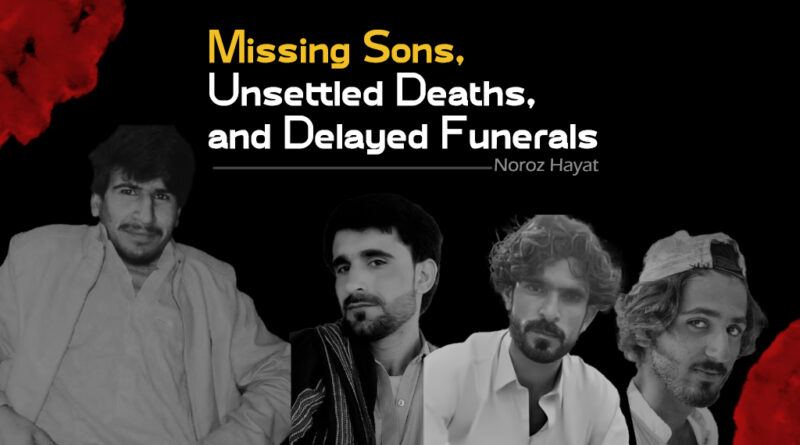
Missing Sons, Unsettled Deaths, and Delayed Funerals
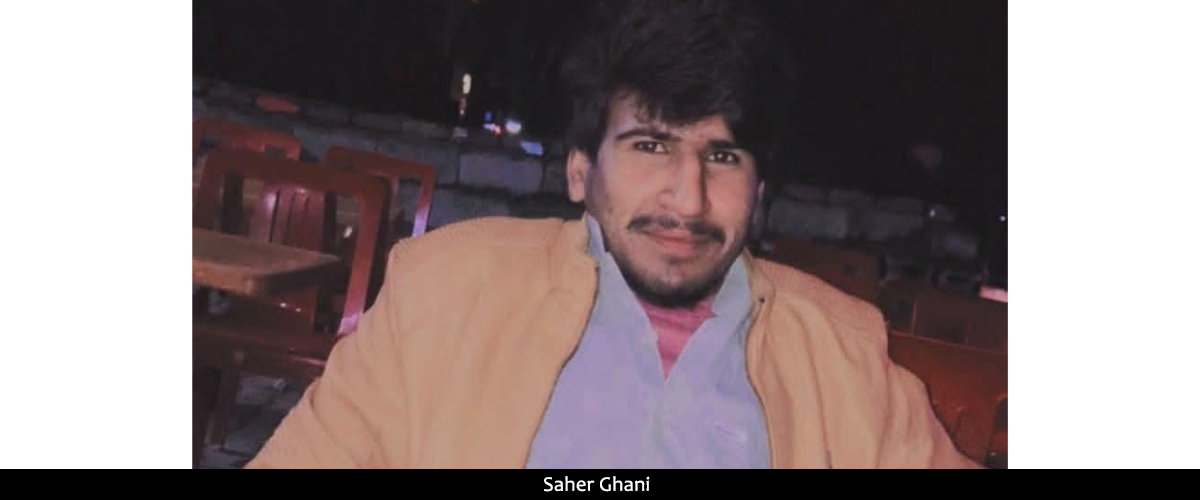
It was the night of November 5th. Saher Ghani left the room to visit a friend at a hospital and never returned.
Fifteen minutes later, one of the roommates called him. There was no answer.
Forty to forty-five minutes after Saher left, security forces stormed the room and forcibly disappeared his two roommates, Salman Baloch and Delip Das. They were held in a cell and questioned the next morning. “They asked us where Saher was,” one of his roommates said. “We told them that all we knew was that he went to the hospital to visit a friend. You can check our phone records as proof that we called him to confirm if he arrived at the hospital, but there was no answer.”
After a day, the roommates were released, while Saher’s fate and whereabouts remain unknown.
Saher, the eldest child in the family, was studying pharmacology in Quetta, the capital of Balochistan. His father, Ghani Karim, holds a master’s degree in sociology. Like many graduates in Balochistan, Ghani struggled to find a job. He eventually opened a small shop and encouraged his son to pursue higher education, believing in a brighter future for him.
Ghani Karim was in Karachi when he heard the news about his son. Immediately, he left for Quetta to learn more about his son’s whereabouts, but was unable to get any information.
In Balochistan, families of the disappeared have two options: One, appeal quietly to governmental officials such as the district commissioner, local representatives, or powerful individuals with a military connection, and plead for the safe return of their loved one. The second option is to join the ongoing protests alongside other families. Ghani chose the first option, and he was told to go home, and that they would search for his son if he were in custody; if found, they promised to ask for his safe release.
Days passed. Nothing came back.
To date, Saher Ghani is still missing.
Two weeks after Saher’s disappearance, people of Khairabad in Kech district of Balochistan received another chilling message. This time it was a dead body.
The body of Farooq Naeem, a young resident of Khairabad, was recovered weeks after he was forcibly disappeared in April 2025.
Farooq had been travelling to Karachi to obtain a medical certificate required for a Qatar work visa. His father, already working there as a labourer, had arranged a job for him so he could live in safety, far from the constant fear that haunts young men in Balochistan.
But Farooq never reached Karachi.
At the Talaar checkpoint, security forces stopped the bus he was travelling on and took him away. He vanished without a trace.
His dead body was found dumped on November 17 in the Banok-e-Chadai area of Kech district.
When his father in Qatar received the news of his son’s death, he said, “Don’t bury my son until I come.”
The body was believed to have been deceased for a day or two. Except for Quetta, there are no morgue facilities throughout Balochistan. As a consequence of the lack of facilities, the deceased are typically buried quickly to prevent decomposition. Waiting for his father and without adequate facilities, the family bought ice and placed it around the body to preserve it.
In some cases, families gather the courage to take the bodies of their loved ones and protest. But Farooq’s family, knowing that justice is written in law but erased in their lives, chose to bury their grief quietly, alongside their son.
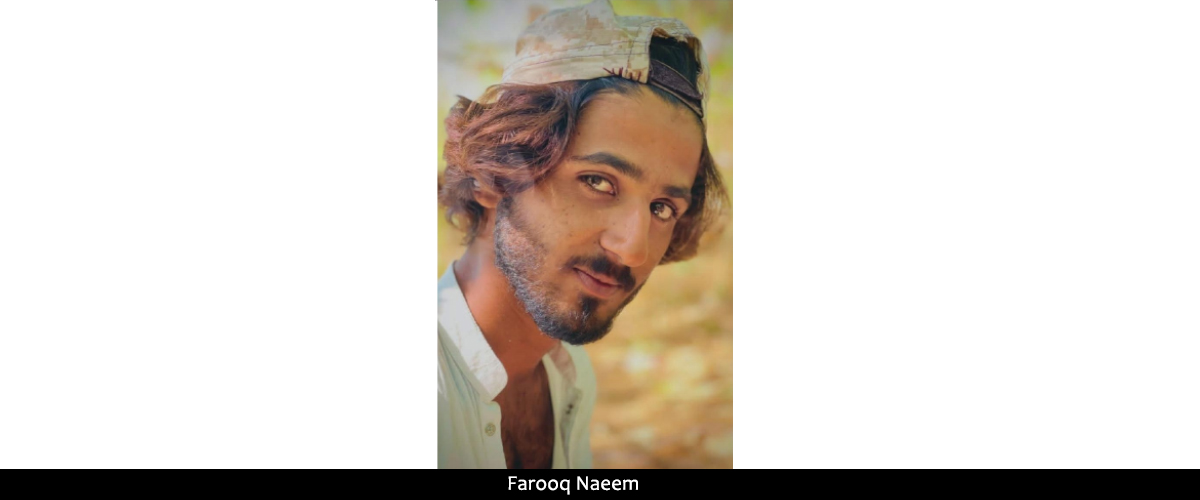
It took nearly a week for his father to return home. Then the family held a proper funeral. As the body was being taken to the graveyard, Farooq’s grandmother cried out in anguish, “Farooq Jan (Dear Farooq), you just turned eighteen, what could you have done to deserve being killed at such a young age?”
Her question, and the killing of innocent young lives, is answered only by silence.
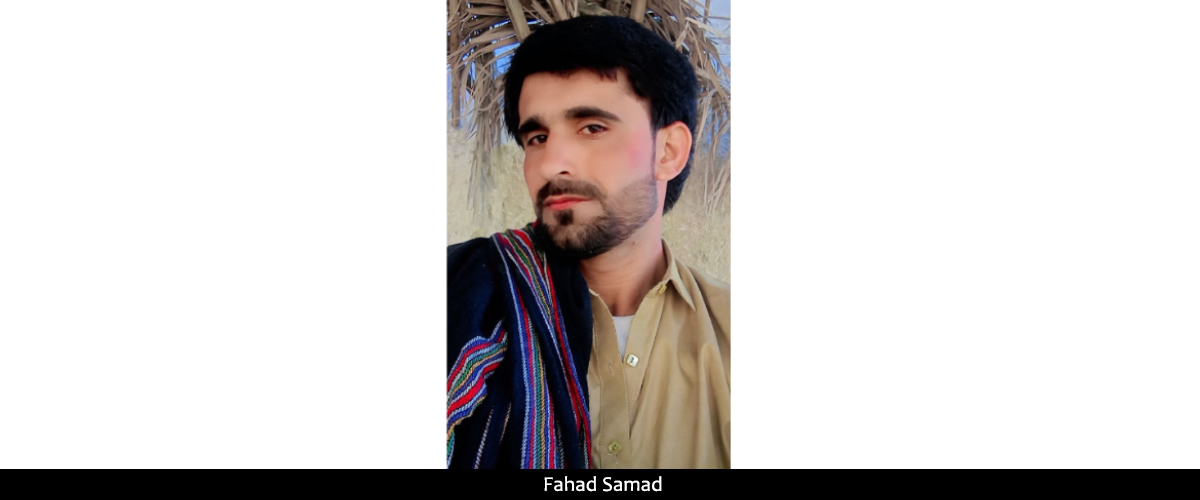
Three days after Farooq’s funeral, death knocked on another door in Khairabad. Fahad Samad, a 29-year-old shopkeeper, was shot dead by unknown gunmen at his little corner store.
Fahad was the sole breadwinner of a large extended family and left behind a wife and a two-year-old daughter, who would grow up knowing her father only through photographs and maybe stories.
The village was shaken by this tragedy. People tried to understand why it had happened. Still, no one accepted responsibility, neither the government forces nor the Baloch militants, who often kill people they suspect may be spying against them, accepted responsibility.
Fahad’s brother contacted both sides involved in conflict. “We asked both parties,” his brother said. “Both denied it. My brother was innocent. “God will punish whoever took the life of our brother.”
Those who knew Fahad find it challenging to understand why he was targeted. He had no disputes, no visible enemies. Each morning, he would open his shop and return to his family after closing it in the evening. Nothing in his life suggested that he was in danger.
A resident of Khairabad said there were only two possibilities. “The truth is only two forces operate here, the army and the Baloch militants,” he said. “One of them killed him. We don’t know which.”
In Balochistan, uncertainty itself becomes the only conclusion.
Three days after Fahad Samad’s funeral, another killing occurred, but this time in Nasirabad, a neighbouring town of Khairabad.
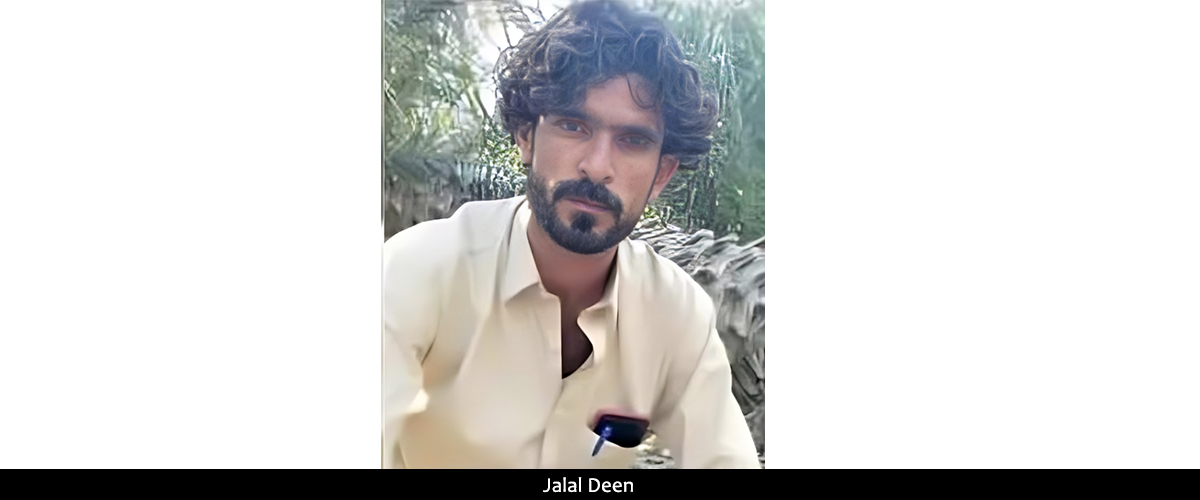
Jalal Deen, 35, a small businessman involved in cross-border fuel trade, was shot dead at a car wash by armed men in a Toyota Corolla. Jalal left behind a wife and three little children. He was the only breadwinner of his family as well. But this time, the perpetrators were known. Relatives said the attackers were members of a local death squad that operates with impunity, backed by the Pakistani security forces.
“Our family has been under surveillance for more than a decade,” said Jalal’s uncle, Ghani Noor. “We have suffered the punishment of the abduction of our family members. Jalal was not the first, and he was not meant to be the last.”
The first abduction in the family occurred in 2014, when Jalal’s elder brother, Del Jan, was taken along with his vehicle and remained missing for eighteen months. When he was finally released, alive, no charges were filed. As in all cases of abductees, Del Jan was too afraid to provide any information about his captors, fearing further reprisals. Like many others who are abducted, his valuable possessions were never returned — in this case, Del Jan’s vehicle.
“They didn’t just take Del Jan,” Ghani Noor lamented. “They took eighteen months of our lives. The family was left in the dark. Every knock at the door felt like it could be his body.”
In August 2018, Ghani Noor himself was abducted. For ten days, his family did not know where he was or why he had been taken.
“They release you, but they don’t free you,” he says. “You come back alive, but the fear stays with you.”
The violence escalated in February 2022 when three family members were abducted together: Ghani Noor (again), Jalal’s younger brother Kamal Deen, and their cousin Mirdost. Kamal was released after twelve days. The other two were returned after forty days. Like all the others, they returned without answers, while the motorcycle they had been riding remained in the hands of the abductors.
This cycle of abduction did not stop there. In December 2024, Kamal was abducted again, this time along with a friend named Fazul Bashir. Fazul was later handed over to the Counter Terrorism Department (CTD) Police and released after one month. Kamal did not return and remains missing.
In January 2025, Ghani Noor was abducted for the third time. He was held for 140 days, transferred to CTD custody, and released after forty days from CTD custody.
Ghani Noor has since left the country. Not in search of opportunity but for survival.
Across Balochistan, people live under the constant threat of disappearance and death, which often go unacknowledged, leaving families without answers or justice. Yet the stories of Saher, Farooq, Fahad, Jalal and countless others demand to be told. Recording their stories, their lives, and their suffering is the only way to ensure they are not erased and that their families’ pain is not forgotten.