
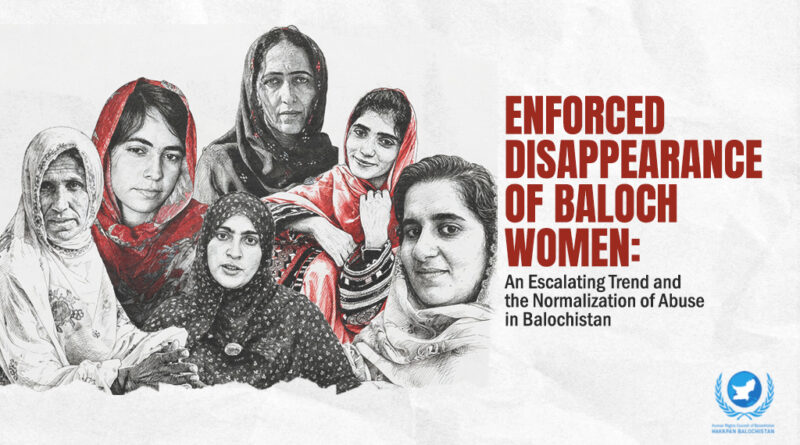
Enforced Disappearance of Baloch Women: An Escalating Trend and the Normalization of Abuse in Balochistan
The Human Rights Council of Balochistan is deeply concerned over the sharp and alarming rise in the enforced disappearance of Baloch women across the region. Once considered an exceptional tactic, the abduction of women by Pakistani state forces has increasingly become a routine instrument of repression. This escalation must be understood within the broader context of the mass enforced disappearances of Baloch men over the past two decades. Thousands of Baloch men, ranging from children and teenagers to elderly individuals, have been subjected to enforced disappearance or extrajudicial killing under the state’s so-called “kill and dump” policy, aimed at suppressing both the ongoing insurgency and peaceful rights movements.
The Normalization of Abuse
For decades, enforced disappearances in Balochistan overwhelmingly targeted men, leaving women to bear the social, economic, and psychological consequences within their families and communities. Since 2025, however, women themselves have increasingly become direct targets, marking a significant shift in the pattern of state repression.
As women assumed public roles as family providers and visible participants in peaceful resistance and rights-based advocacy, their prominence exposed them to retaliation. Enforced disappearance has thus been extended to women as a deliberate mechanism of punishment and intimidation, intended to suppress dissent, silence other women, and deepen collective suffering in a region already devastated by mass disappearances.
Multiple instances have also emerged in which women were subjected to severe pressure by security forces and intelligence agencies to act as informants against separatist groups. In some cases, this sustained coercion and intimidation reportedly led to women dying by suicide, highlighting the extreme psychological pressure exerted both in custody and beyond.
HRCB finds that the targeting of women is neither incidental nor isolated. It reflects a calculated effort to undermine women-led resistance by silencing activists and pressuring their families and communities. Raids are conducted openly, families are coerced into silence, and effective legal remedies remain largely inaccessible. The sustained absence of accountability has allowed these practices to become embedded in routine security operations, transforming the enforced disappearance of women from an exceptional abuse into a normalized instrument of state control.
Statistical Overview
Out of 26 documented cases:
- 9 victims remain missing
- 9 were released
- 2 are currently jailed
- 3 were subjected to forced confessions
- 1 was killed in custody
- 2 cases remain unconfirmed
Documented Cases (2025-2026)
This report documents cases of enforced disappearance of Baloch women from 2025 to the present. These cases reveal a disturbing pattern of collective punishment and the systematic erosion of legal protections. Women from diverse backgrounds, including students, health workers, housewives, and human rights activists, have been abducted through house raids and late-night operations. Several victims were subjected to repeated disappearances and torture, while at least one case resulted in custodial death.
These abductions have been carried out by the Counter Terrorism Department (CTD), Frontier Corps (FC), Inter-Services Intelligence (ISI), and Military Intelligence (MI), either independently or through coordinated operations.
1. Gulzadi (Human Rights Activist) – Bolan/ Quetta
Gulzadi, daughter of Nabi Dad Satakzai, is a Baloch human rights activist, and a member of Baloch Yakjehti Committe (BYC) from Mach, Bolan. On 7 April 2025, she was abducted by the CTD during a house raid on Brewery Road, Quetta, in the presence of her family. This wasn’t her first disappearance: Gulzadi was first abducted on 12 March 2025 and later released. On 24 March, her home was raided again, belongings looted, and personal items desecrated. Her April abduction marks the third act of persecution within a single year.
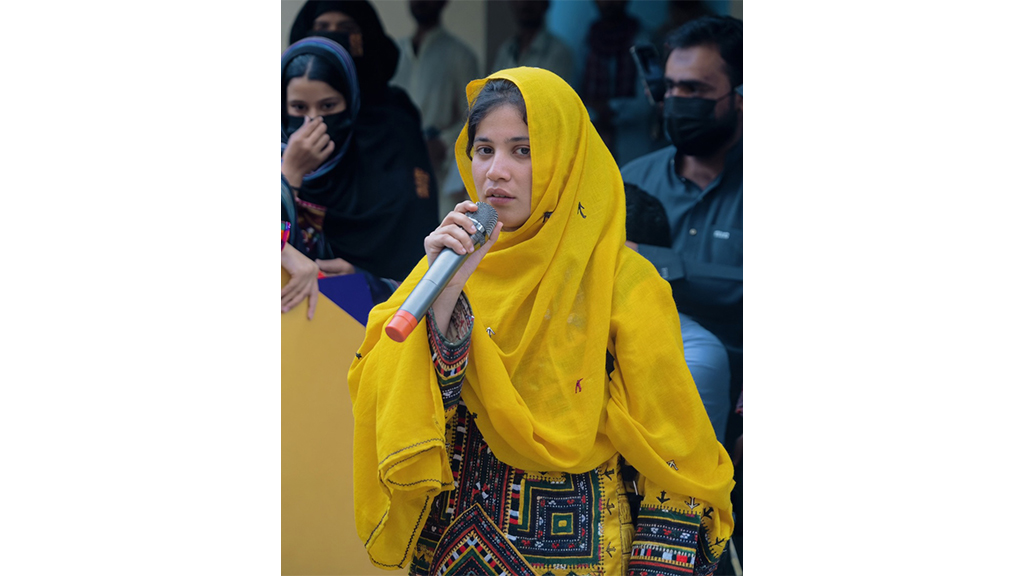
Following her abduction, she was transferred to jail under the draconian Maintenance of Public Order (3-MPO), illustrating the use of preventive detention laws to legitimize enforced disappearance. She was later nominated in 16 different criminal cases. Although she was granted bail in the rest of these cases, she remains imprisoned in three others.
Throughout this process, the state has demonstrated a clear disregard for constitutional guarantees. Ordinary cases have been turned into anti-terrorism charges, and two separate FIRs have been filed for the same incident with different charges. This blatant disregard for legal norms reflects the state’s intention to prolong her incarceration while systematically denying her the right to a fair trial.
2. Mahjabeen Baloch (Student) – Besima / Quetta
Mahjabeen, 24, daughter of Ghulam Mustafa and a BS Library Science student at the University of Balochistan, was forcibly disappeared on 29 May 2025 at approximately 3:00 AM. Personnel from the CTD and Military Intelligence reportedly abducted her from the Civil Hospital Hostel in Quetta. Her case underscores the targeting of educated Baloch women and the breach of protected civilian spaces such as hostels and hospitals. Nearly a year has passed, yet her whereabouts remain unknown.
3. Robina Baloch (Health Worker) – Kech
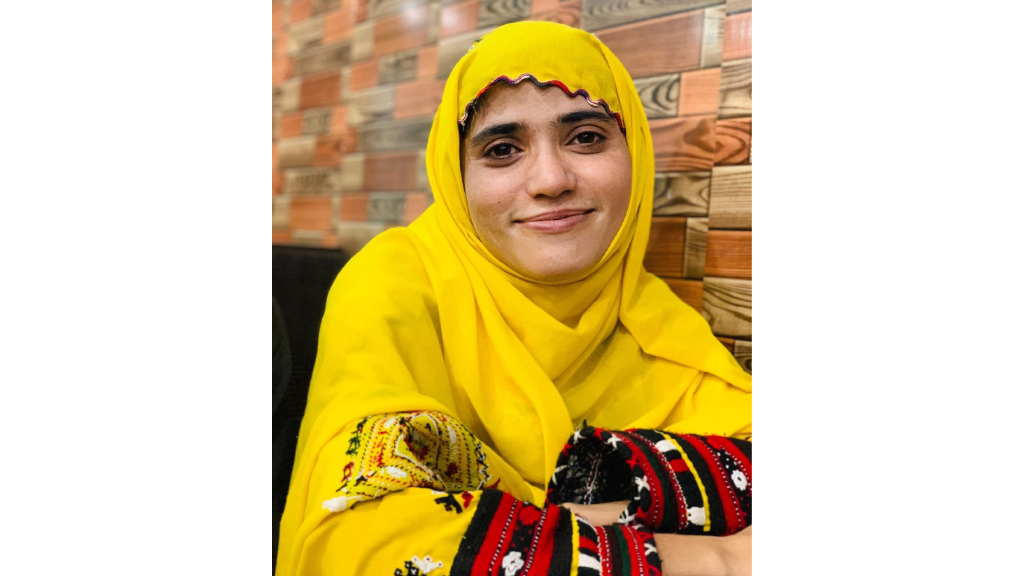
On 30 June 2025, Robina Baloch, a government-employed Lady Health Visitor (LHV) from Gwarkop in Kech district, was forcibly taken by FC and Military Intelligence personnel from her residence in Overseas Colony, Turbat. During the raid, security forces ransacked her home. She was subsequently released without any explanation.
4. Safia Bibi – Khuzdar (Zehri)
Safia Bibi was detained on 5 October 2025 during a large-scale military operation in Norgama, Zehri, Khuzdar district. Security forces imposed a curfew, sealed the area, and conducted mass house raids. Safia and three men were taken to an undisclosed location. Although later released, her detention occurred in a context of collective punishment, where entire communities were placed under siege.
5-6. Nazia Shafi and Pari Baloch – Panjgur (Custodial Death)
The case of Nazia Shafi represents one of the most horrific examples of state violence against women in Balochistan. On the night of 28 October 2025, FC personnel and armed collaborators raided her home in Panjgur and abducted Nazia and her mother, Pari Baloch at gunpoint. On 29 October, Nazia was found dumped near Civil Hospital Panjgur in critical condition. She died from her injuries while being transferred for treatment. Her mother was later released with visible signs of torture. Nazia’s death constitutes custodial killing following enforced disappearance.
7. Nasreen– Awaran / Hub
Nasreen, a 15-year-old girl from Teertaj, Awaran, was abducted on 22 November 2025 around midnight near Daro Hotel, Hub Chowki. CTD and Military Intelligence personnel carried out the abduction. She remains missing.
8. Farzana Zehri – Khuzdar
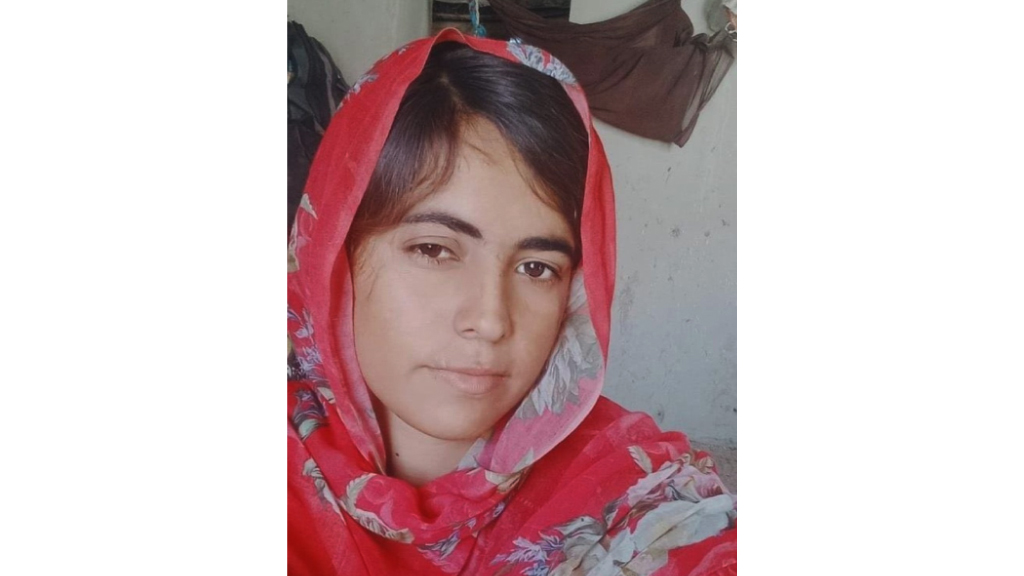
Farzana Zehri was forcibly disappeared on 1 December 2025 while returning home from a hospital in Khuzdar, where she was reportedly detained by security forces. Her whereabouts remained unknown for months, underscoring the brazen nature of enforced disappearances carried out even in public settings. On 18 March 2026, she was presented as a suicide bomber during a press conference and made to confess to alleged links with Baloch separatist groups. During the same appearance, responsibility was also attributed to the Baloch Yakjehti Committee (BYC) and its leadership for allegedly facilitating such activities without any evidence.
9. Rahima (Housewife) – Chagai
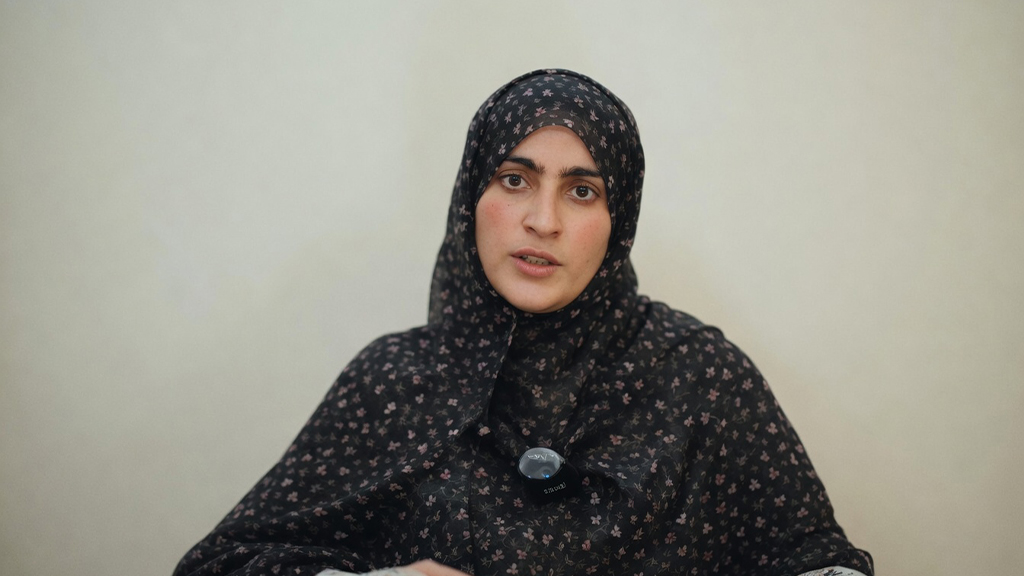
Rahima Bibi, daughter of Abdul Rahim, a 20-year-old housewife from Zahoor Colony, Dalbandin, was forcibly disappeared on 9 December 2025 during a late-night raid conducted by security forces. Her younger brother, Zubair, was also taken during the operation, and both siblings remained missing for several months.
On 18 April 2026, Rahima Bibi was presented before the media in Quetta after nearly six months in custody. During the press conference, authorities portrayed her as an alleged facilitator of a suicide bomber in what was described as a forced confession. Following the press conference, Zubair was reportedly released. No explanation was provided regarding the legality of their detention or the circumstances of their release.
10. Hazra Baloch (Housewife) – Hub
Hazra, daughter of Atta Muhammad, a 27-year-old housewife, and her two-year-old son Brahmdag, residents of Zehri Goth near Daroo Hotel, Hub, were forcibly disappeared on 18 December 2025 from their home. FC and ISI personnel carried out the raid. Both were released on 20 December without any explanation.
11-12. Hani Baloch and Hair Nisa Baloch – Hub
Hani, a 27-year-old housewife who was eight months pregnant and the daughter of Dilwash, along with Hair Nisa, a 17-year-old student and daughter of Wahid, both residents of Gangee Goth near Daroo Hotel in Hub Chowki, were forcibly disappeared on 20 December 2025. The operation was reportedly carried out by FC, CTD, and ISI personnel during a late-night raid on their homes.
Hani was later released, while Hair Nisa remained disappeared for several months. During this period, their families organized protests and sit-ins in Kech, Hub, and Quetta, demanding their recovery. According to reports, two male relatives of Hair Nisa, Mujahid Dilwash and Fareed Ijaz, were also forcibly disappeared during the same period, and their whereabouts remain unknown.
On 12 May 2026, Hair Nisa was presented before the media during a press conference held in Quetta, where authorities alleged her involvement in a planned suicide attack. Her appearance came nearly five months after her enforced disappearance. Prior to the press conference, no information regarding her whereabouts or legal status had been made available to her family. She was the third woman documented in this report who was publicly presented by authorities following a prolonged period of enforced disappearance.
13. Fatima Baloch (Housewife) – Panjgur / Hub
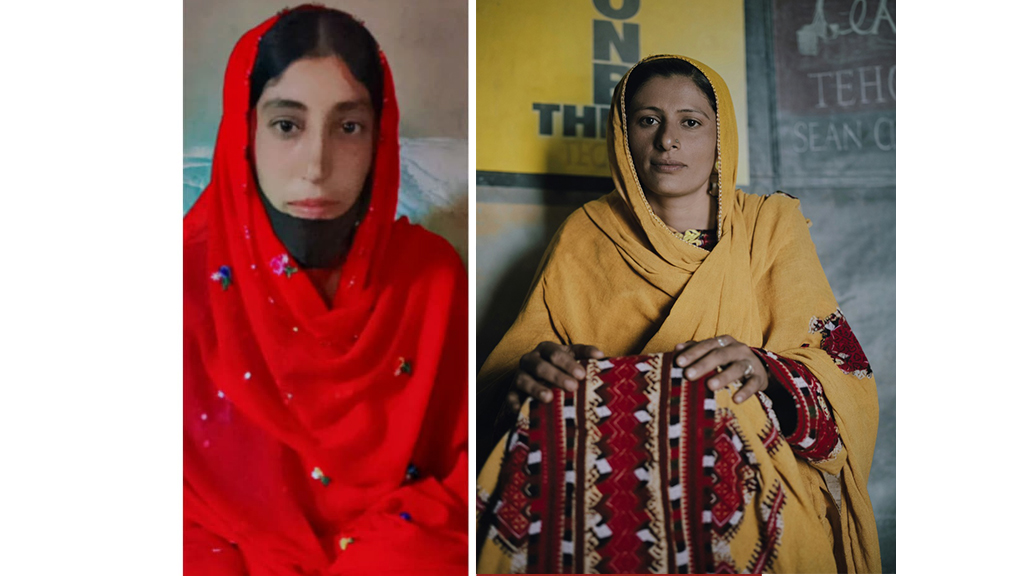
Fatima, daughter of Muhammad Jan, a 30-year-old housewife from Essai, Panjgur, was forcibly disappeared on 13 January 2026 from Akram Colony, Hub Chowki, by MI and CTD personnel. After two months of disappearance, she was released on 16 March.
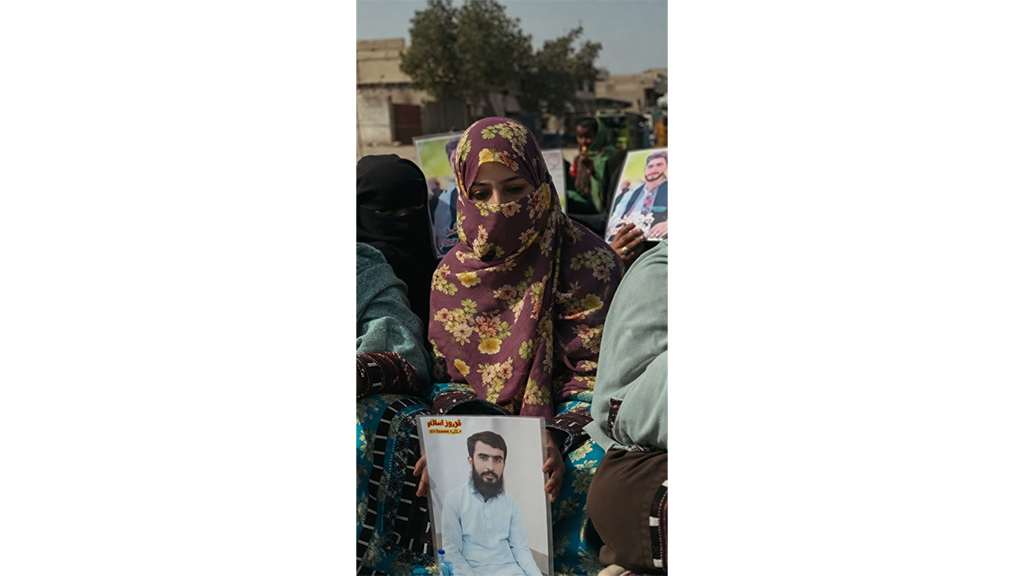
This case shows a pattern of repeated targeting within the same family. Her husband has faced enforced disappearance on three occasions. He was released each time. Fatima took part in protests demanding his release before her own disappearance.
14. Hayat Bibi (Housewife) – Awaran / Khuzdar
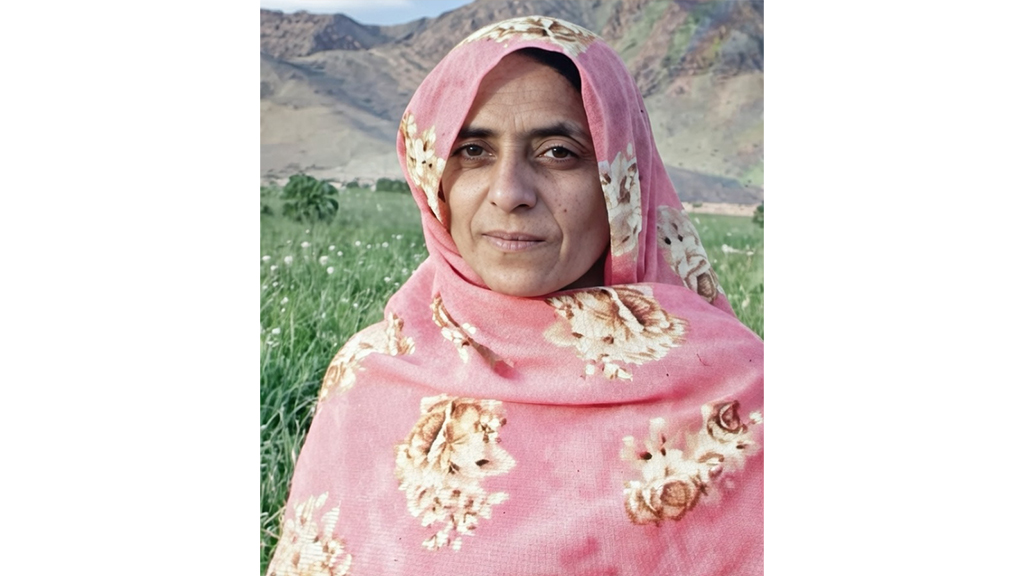
On 8 February 2026, Hayat Bibi, daughter of Ahmed, a 42-year-old housewife from Nokjow Mashkay, Awaran, was forcibly disappeared along with her husband, Fazal Kareem, a 48-year-old police employee, and their son, Nawaz Shareef, a 28-year-old police clerk. FC and intelligence agencies carried out the raid at their residence in Gazgi, Khuzdar. Hayat Bibi was later released, while the fate and whereabouts of the other detainees remain unclear.
15. Ayesha Baloch (Student) – Lyari / Karachi
Ayesha, daughter of Lal Jan, an 18-year-old student, was reportedly taken into custody on 28 February 2026 during coordinated raids on multiple homes in Ali Muhammad Mohalla, Kalari area of Lyari, Karachi. Pakistani forces carried out the operation, during which she was detained along with another student, Dawood, son of Ibrahim. Both were moved to an undisclosed location, and their whereabouts remain unknown.
16. Shakeela Baloch (Quran Teacher) – Karachi
Shakeela, a 24-year-old Quran teacher and wife of Naseer, residing in Haji Shah Ali Goth, Karachi, was forcibly disappeared on 8 April 2026 at approximately 2:00 AM. CTD personnel reportedly abducted her during a late-night raid on her home. Her whereabouts remain unknown.
17. Gull Banuk (Housewife) – Kech
Gull Banuk, a 22-year-old resident of Singabad Karki, Kech, was reportedly taken from her home at around 1:00 AM on 14 April 2026. She is the daughter of Taj Muhammad and a housewife. The abduction was carried out by personnel from the FC and CTD. Since then, there is no information about her whereabouts.
18. Haseena Baloch (Housewife) – Awaran / Karachi
Haseena Baloch, a housewife and daughter of Noor Bakhsh, originally from Reckchai Kolwah, Awaran, was forcibly disappeared from her residence in Naval, Karachi, on the night of 16 April 2026. The abduction is reportedly linked to CTD and MI personnel. Since then, her whereabouts remain unknown.
19. Khadija Baloch (Student) – Turbat / Quetta
Khadija Baloch, a seventh-semester BS Nursing student from Hironk, Kech, was forcibly disappeared from the women’s hostel of Bolan Medical College in Quetta on 21 April 2026. Following her abduction, dozens of female students staged a protest outside the college hospital, demanding her immediate release.
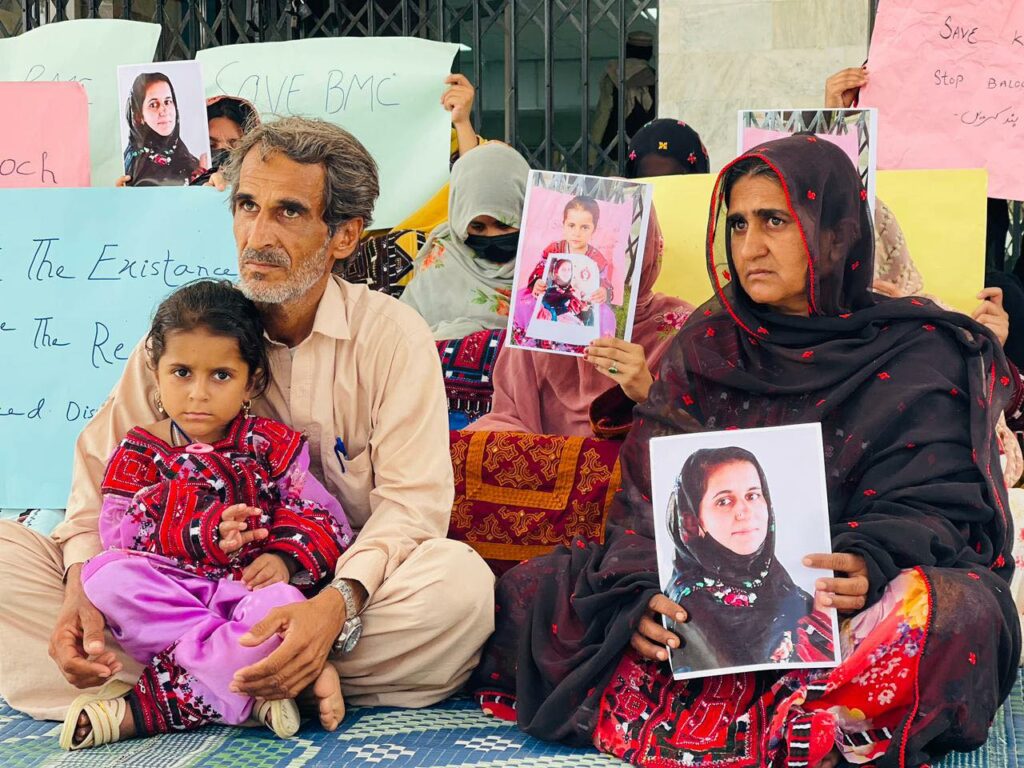
According to her family, she has been subjected to torture and later transferred to Huda Jail, Quetta. They further state that she is under intense pressure to accept false allegations, reportedly linking her to militant organizations.
20. Sameena Baloch – Khuzdar
On 22 April 2026, Sameena Baloch, daughter of Dost Muhammad, was forcibly disappeared along with her cousin Qambar Baloch, son of Lateef, during a night raid in Naal, Khuzdar. During the raid, forces reportedly harassed family members and took both individuals to an undisclosed location.
After three days of enforced disappearance, Sameena and Qambar were released on 25 April 2026. No explanation was provided for their detention or subsequent release.
21-22. Unconfirmed Case – Kech
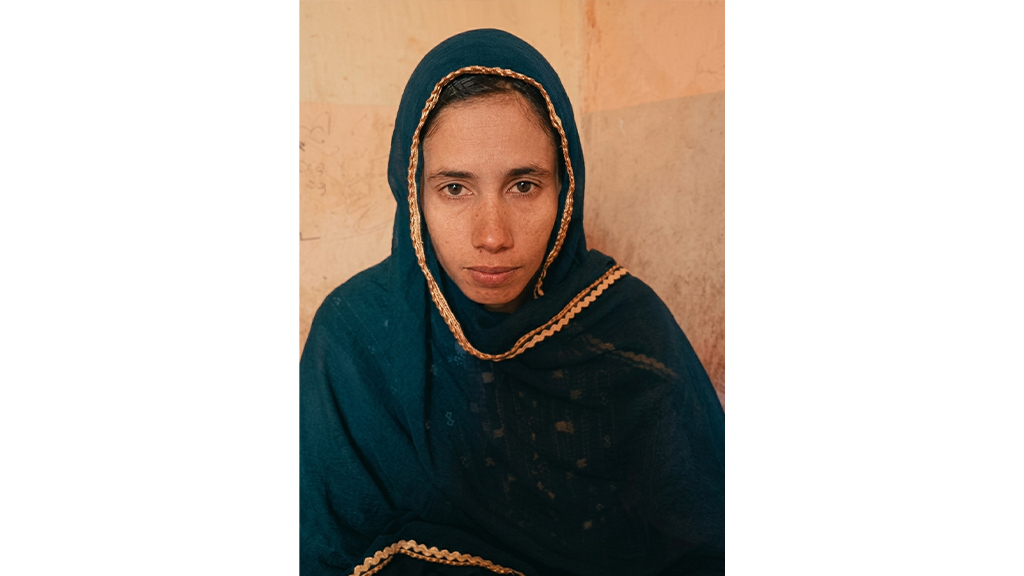
On 21 April 2026, reports emerged from Sangabad, Kech, of the alleged enforced disappearance of the mother and sister of Atta Baloch, a deceased separatist, during a house raid. However, the incident could not be independently verified, and the identities of the victims remain unconfirmed.
23-24. Zubaida and Zarnaaz Baloch (Housewives) – Kech
Zubaida, wife of Haji Badal, and her daughter-in-law Zarnaaz, widow of Daulat, both residents of Tejaban in Kech district, were forcibly disappeared on 29 April 2026 during a raid on their home. According to reports, Frontier Corps personnel carried out the operation and took both women to an undisclosed location. Their whereabouts remain unknown.
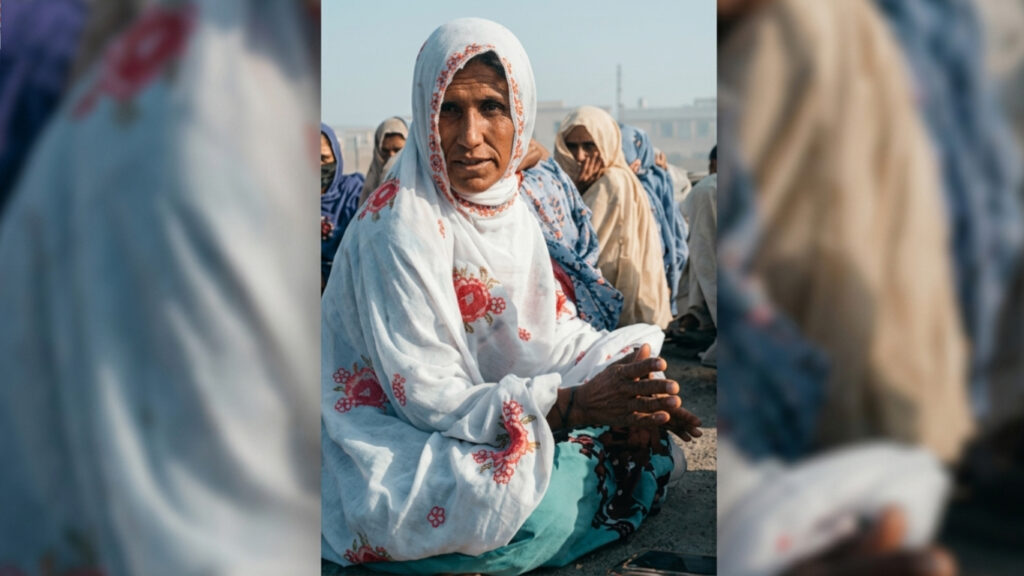
The case is particularly concerning in light of the circumstances surrounding their family. Zarnaaz’s husband, Daulat, son of Haji Badal, was reportedly killed on 18 February 2026 by a state-backed death squad. The subsequent enforced disappearance of his widow and mother has raised serious concerns regarding the use of collective punishment against family members of individuals perceived to be linked to political or insurgent activities.
This case reflects a broader pattern in which women are targeted following the killing, disappearance, or alleged involvement of male relatives. The abduction of Zubaida and Zarnaaz underscores the increasing vulnerability of women to enforced disappearance and other forms of retaliation in Balochistan.
25. Habiba Pirjan (Poet) – Kech
Habiba Pirjan, a respected Balochi-language poet from Kech district, was forcibly disappeared for the second time on 25 May 2026 during a raid on her residence. According to reports from her family, security personnel carried out the operation and took her to an undisclosed location. Her whereabouts remain unknown.
This was not the first time Habiba Pirjan had been subjected to enforced disappearance. She was previously abducted on 19 May 2022 and released three days later, on 22 May 2022, after authorities reportedly failed to establish any evidence against her.
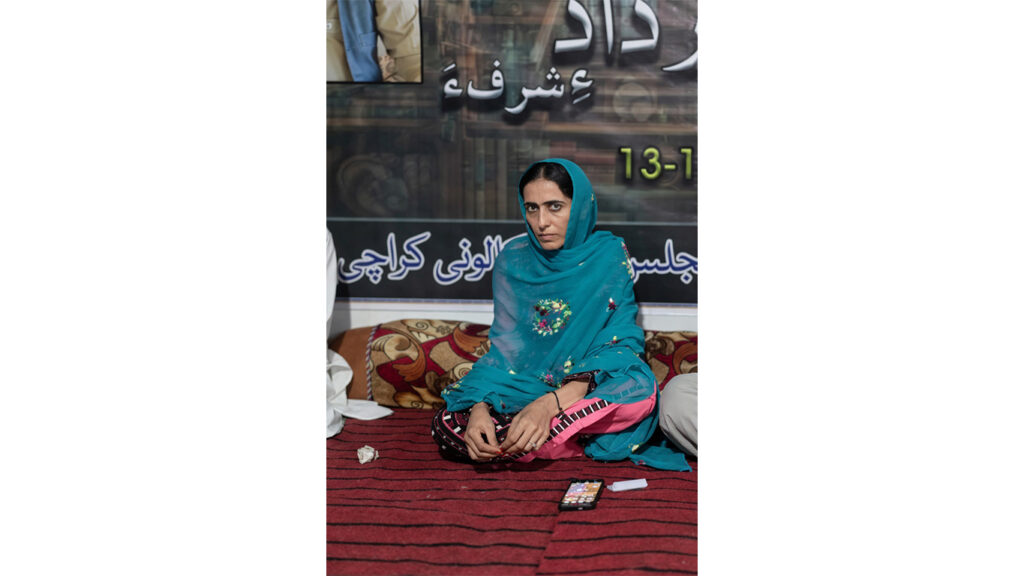
According to video testimony provided by her daughter, Hina Baloch, the latest raid was accompanied by intimidation and destruction of property. Security personnel reportedly vandalized the family home and confiscated the mobile phones of family members, including Hina Baloch, her brother Yasir Baloch, and their uncle. The seizure of communication devices further restricted the family’s ability to seek information about Habiba’s whereabouts and document the incident. This case highlights the targeting of cultural figures and the broader pattern of harassment directed at the families of victims of enforced disappearance.
26. Unnamed Elderly Woman (Housewife) – Dera Bugti
A 65-year-old woman, identified as the wife of Shahal Mamdazi Bugti, was forcibly disappeared from Pirkoh town in Dera Bugti district during a crackdown carried out by Frontier Corps personnel. According to reports, she was taken into custody amid a wider security operation in the area. Her whereabouts remain unknown. During the same crackdown, nine other individuals were reportedly forcibly disappeared by the Counter Terrorism Department (CTD) from Dera Bugti town.
Forced Confession:
Forced confessions have become a recurring practice used by the state in Pakistan to shape public narratives around dissent in Balochistan. Women are first subjected to enforced disappearance, held in custody for prolonged periods without due process, and during this time are reportedly exposed to coercion and abuse. After weeks or months in detention, they are suddenly brought before the public, often through staged appearances or recorded videos, to “confess” to acts they have consistently denied.
These confessions are then amplified through state-aligned media, where they are presented as proof of militancy, portraying the victims as linked to armed groups. This process serves to criminalize individuals, discredit peaceful voices, and justify further crackdowns under the framework of counterterrorism.
The case of Mahal Baloch was one of the earliest examples of this pattern, which has since been repeated in numerous other cases. In February 2023, she was taken into custody during a late-night raid on her home in Satellite Town, Quetta, by the CTD, without a warrant. Authorities later claimed she had been arrested with explosives and accused her of links to militant activity, including involvement in a suicide attack, allegations her family strongly denied. Despite being kept on physical remand for fifty-five days, authorities failed to present any substantial evidence against her. Instead, a video later surfaced in which she appeared to “confess” to militant involvement. This statement was made while she remained in police custody, not before a court of law. Alongside this, a campaign was initiated to discredit her and her family, reinforcing the official narrative despite the absence of evidence.
Such cases highlight a disturbing pattern in which women are pressured in custody to accept fabricated charges. The circumstances under which these confessions emerge, prolonged incommunicado detention, lack of legal representation, and absence of judicial oversight, raise serious questions about their credibility. Confessions obtained under such conditions carry no legal weight and cannot be treated as reliable evidence. Rather than establishing truth, these practices raise serious concerns about due process, accountability, and the use of state power to control narratives.
Legal Framework and Violation:
These acts violate Pakistan’s Constitution (Articles 9, 10, 14), international human rights law, including the ICCPR, CEDAW, CRC, and the prohibition of enforced disappearance under customary international law. The failure to criminalize enforced disappearance and hold perpetrators accountable perpetuates impunity and entrenches a culture of state-sanctioned abuse.
Note: This report will be updated periodically as new cases and further information become available.
Last Updated: June 13, 2026
