
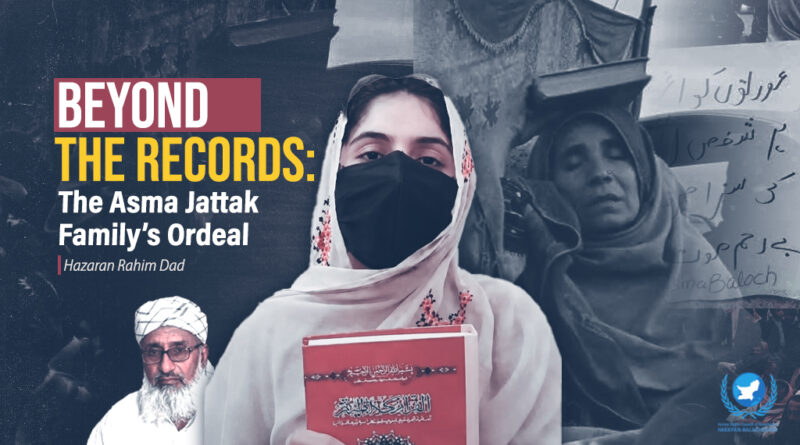
Beyond the Records: The Asma Jattak Family’s Ordeal
November 2025 was when I first thought of travelling to Khuzdar to document Asma’s story. Now, to my dismay, November has come around again. An entire year has passed, yet I am still struggling to write the story I had hoped to tell back then.
What began as an intention to document the enforced disappearance of a young woman has, with the passage of time, become something far more difficult to write. Asma’s life, and the lives of those around her, have continued to be shaped by tragedies I could scarcely have imagined when I first set out to tell her story.
In early February 2025, members of the death squad had forcibly taken Asma from her home in Khuzdar after she and her family rejected a marriage proposal from one of its members. An image from those days has stayed with me. It circulated widely on social media, showing her mother sitting in protest, holding the Holy Quran above her head and pleading for her daughter’s return. I have never quite been able to forget that image.
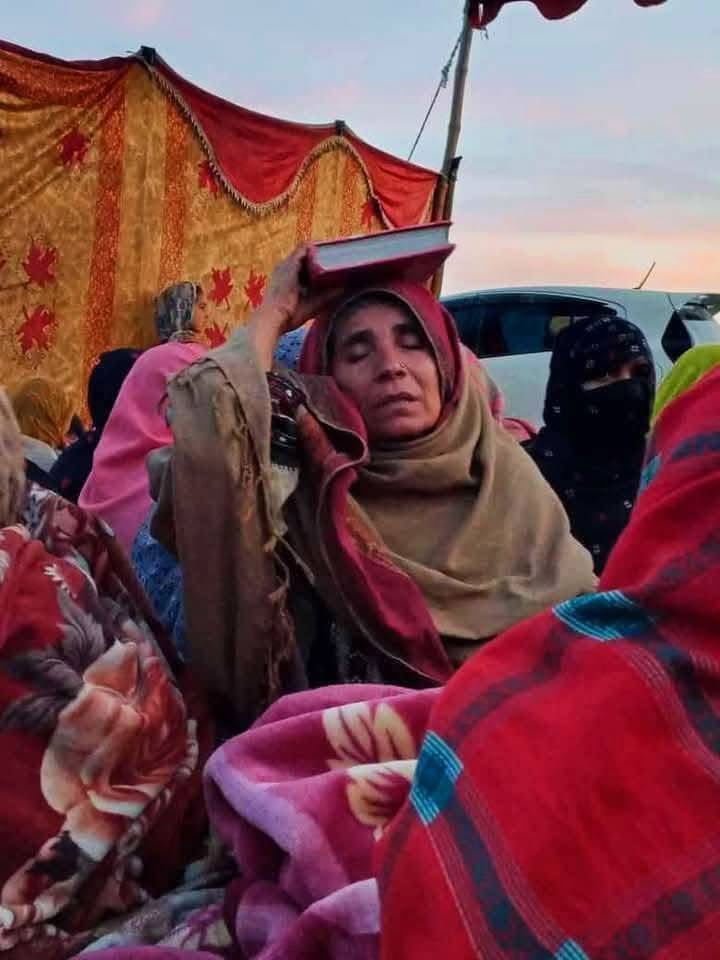
For three days, her family and local residents protested, staging a dharna on Khuzdar’s main RCD Road and demanding her safe return. Eventually, Asma was released. But her release did not mean that what had happened to her could simply be forgotten nor could it erase the anguish of those who had spent those days not knowing whether they would ever see her again.
I still wanted to go to Khuzdar. I wanted to meet Asma and her family, hear their account of those days and understand what they had endured. I wanted to tell a story that did not end simply because she had come home.
I got in touch with her brother, Professor Atta Ullah, a lecturer at the University in Uthal. He welcomed my intention and assured me that I could visit whenever I found the time. For a moment, it seemed that the journey I had been putting off might finally happen.
But barely a week later, I received another piece of news. Asma’s uncle had been shot.
The news changed everything. Once again, violence had reached the same family, bringing another tragedy into a life already unsettled by the events surrounding Asma’s disappearance. And once again, the circumstances appeared to lead back to the same refusal that had first brought the family into danger.
I found myself wondering how I could possibly go to Khuzdar now. How could I arrive at their doorstep with a notebook and questions, asking them to revisit their suffering when they were once again dealing with the loss of a family member?
So I postponed the visit thinking that there would be another time. And somehow, between that November and this one, an entire year passed. The journey to Khuzdar remained unmade, the conversations I had hoped to have never took place, and the story I had intended to document did not remain where I had left it. While I was still trying to make sense of what had already happened, more was happening. More violence, more grief, more names added to a family history already burdened with too much loss.
Perhaps this is what happens when scarcely a day passes in Balochistan without news of another disappearance, another body recovered, another family left searching for someone whose return grows increasingly uncertain. One loss is barely mourned before another arrives. There are seven days in a week, and sometimes it seems that not one passes without another family being plunged into grief. A name disappears, a photograph begins circulating, a family takes to the streets in search of answers. Some return alive. Others are never heard from again. For some families, the search ends only when a body is found. It is difficult to keep count when the dead arrive faster than their stories can be told.
And so, this November, I return to Asma. To the story I had hoped to document a year ago, and to all that has happened in the time since. A story I have come to know, in fragments, through Asma’s own words, through those of her brother and family, and through the tragedies that have followed them.
Asma Jattak: It Began with a Refusal
2012 — The killing that changed everything
Asma Jattak grew up in Anjeera, a village in the Surab tehsil of Kalat district, in a family headed by her father, Master Inayatullah Jattak, a primary school teacher. Her childhood was much like that of other girls growing up in the village. She was still attending school when her family arranged her engagement to her cousin, Abdul Salam Mengal.
Abdul Salam was the son of Muhammad Umar Mengal, Master Inayatullah’s brother-in-law, who also lived with his family in Anjeera. He had received his early education at the village school before moving to Al-Hijrah Residential School and College in Ziarat. After completing his matriculation and FSc, he secured admission to the Civil Engineering Department at the University of Engineering and Technology in Khuzdar.
By the time he became engaged to Asma, Abdul Salam was in his second year at university.
According to the family’s account, Zahoor Jamalzai, with the assistance of Niaz Ahmed Sheikh, plotted to kill Abdul Salam.
Zahoor is a death squad member according to reports and is also described as an associate and armed enforcer of Sanaullah Zehri, the former Chief Minister of Balochistan, and a tribal sardar with considerable influence in the region.
On November 13, 2012, Niaz Ahmed invited Abdul Salam to the nearby village of Lakhorian, ostensibly for a friendly meeting and an outing. The family alleges that Zahoor Jamalzai and his associates were waiting for him there. Abdul Salam was shot dead, and his assailants fled.
The family approached the police in Surab to register a First Information Report (FIR) over his murder. But their attempt to seek justice encountered an obstacle almost immediately. According to the family, the police refused to register the case, arguing that the place where the killing had taken place did not fall within the jurisdiction of their police station.
The following day, another message arrived. It was from Zahoor Jamalzai.
According to the family, Zahoor sent a text message to Abdul Salam’s brother, Muhammad Anwar, informing him of the killing. But the message carried something more disturbing than an admission of what had happened. Zahoor also expressed his intention to marry Asma and threatened to kill any other man her family might choose for her.
2013–2016: Leaving Home, but Not the Threats Behind
By 2013, the threats had made it increasingly difficult for the family to continue living in Anjeera. Fearing for their safety, they made the painful decision to leave the village where their family had lived for generations and move to Khuzdar. They hoped that distance might offer some protection and allow them to rebuild their lives away from the people who had made them feel unsafe.
But leaving Anjeera did not mean leaving the threats behind.
In the years that followed, the family repeatedly sought help from influential local figures, tribal elders and political representatives. They appealed to people who, they hoped, could intervene and persuade Zahoor Jamalzai to stop harassing them. In 2016, Master Inayatullah Jattak approached Mir Nematullah Zehri [tribal-influencial person] and recounted what his family had endured since Abdul Salam’s murder: the threats, the intimidation and the continuing pressure to force Asma into marriage.
According to the family’s account, Mir Nematullah told him that Zahoor’s brother, Rahim Bakhsh, was with him at the time. He assured Master Inayatullah that he would speak to Rahim Bakhsh and take responsibility for ensuring that the family would no longer be harassed.
The following morning, Zahoor himself telephoned Master Inayatullah and apologised.
For a moment, it seemed that the intervention might finally bring an end to years of intimidation.
In the years that followed, two or three marriage proposals were brought for Asma and before responding to any proposal, Master Inayatullah made sure the prospective families knew what had happened. He told them about Abdul Salam’s murder, the threats against Asma and the dangers his family had faced ever since.
Once they learned about the circumstances, the families withdrew their proposals.
The assurance of 2016, however, did not hold for long. Within a few months, according to the family, Zahoor resumed his demands. He began sending different people to the family’s home to press them to agree to his marriage proposal to Asma. Their refusal was once again met with threats of murder.
February 5–6, 2025: The Night Asma Was Taken
Nearly twelve years after leaving Anjeera in search of safety, the violence the family had tried to escape reached them inside their home in Khuzdar.
On the night of February 5–6, 2025, the family was at home in Shahzad City, near the Police Lines, when, according to the family’s account, Zahoor Jamalzai arrived with approximately 20 to 25 armed men, locally described as death squads. They forced their way into the house, assaulted family members and forcibly disappeared Asma away.
She was asleep in her room when the commotion began. In her account, the first thing she remembers is hearing people shouting outside. Moments later, her bedroom door was kicked open. A man grabbed her by the hair, shone a mobile phone’s bright light into her face and asked someone standing nearby:
“Recognise her. Is this the girl?”
The other man looked at her and replied, “Yes, this is her.”
They dragged her out of the room by her hair. She had no shoes on and no chadar to cover her head. Before taking her away, the men also severely assaulted her elder sister and other members of the household. They tied Asma’s hands and feet and bound a cloth tightly around her mouth to prevent her from screaming. Then they threw her into the boot of a vehicle.
As soon as the vehicle set off, an ambulance siren began blaring. It continued without interruption. Asma remembers nothing of the journey that followed. She had lost consciousness.
When she regained consciousness, the vehicle had stopped outside a house. Zahoor opened the boot and pulled her out. Almost immediately, he began abusing her mother and sister. Two women from inside the house also came out, verbally abusing her, threatening her and trying to frighten her.
Asma did not know exactly where she had been taken. From conversations among the people around her, however, she gathered that the house was in Zalakan, in Zehri. It belonged to one of Zahoor’s sisters. The men staying there would leave for the nearby mountains in the morning and evening, apparently fearing arrest. Asma remained there for approximately two days.
During this time, Zahoor’s brother, Rahim Bakhsh, repeatedly telephoned the women in the house to ask whether Asma was there. Perhaps fearing that the police might raid the house and arrest them, her captors eventually moved her to another house, belonging to another of Zahoor’s sisters, approximately half an hour away.
By then, Asma had begun to understand that her family was searching for her and that protests had broken out against her disappearance. She could hear her captors receiving repeated telephone calls. From their conversations, she gathered that roads had been blocked and that the situation outside was becoming increasingly difficult for them. They also discussed taking her to Iran, but complained that the roads were closed.
It was during this period that they began recording videos of her. In the presence of family members and at gunpoint, she was made to say that she had accompanied them of her own free will. She was forced to record two or three videos.
“They threatened to kill me and harm my family if I refused. I had no choice but to say what they wanted. I was trying to save my own life and the lives of my family members. Those videos were not made with my consent. They were recorded at gunpoint and under threats of death.”
Eventually, she sensed a change in the conversations around her. Someone telephoned her captors and told them that the situation had become too serious and that they should release her. The caller reportedly assured them that her marriage to the man concerned would be arranged later, at any cost.
After this, Asma was put on a motorcycle and taken some distance away to an isolated place, where she was left. Her captors then telephoned Rahim Bakhsh and told him where she had been abandoned. He came to collect her, put her in a vehicle and handed her over to the police.
The Protests for Asma’s Return
With Asma still missing, her family and residents of Khuzdar took to the streets near Sabzi Mandi, blocking the road and demanding her immediate and safe recovery.
What had happened inside one family’s home soon became a matter of public outrage across Balochistan. Protests spread beyond Khuzdar, with people in different towns and districts blocking roads and highways in solidarity with the family.
For years, Asma’s family had approached elders, influential figures and political representatives, seeking protection from the threats that followed them. Now, with Asma taken from her own home, they were standing on the road, asking for her return.
On the third day of her disappearance, two deeply distressing videos of Asma began circulating on social media that she had gone with her own will, but the family continued to demand her safe recovery.
Later, according to Asma, the recordings had been made under coercion and intimidation.
Finally, on February 9, 2025, after three days of sustained protests across Balochistan, Asma was handed over to her family following her recovery the previous day.
After Asma’s Return: The Violence That Did Not End
Asma’s return did not bring an end to the fear. As she later recalled, “I was never truly free, even after my release.” She remained terrified that those who had abducted her might harm her father, brothers or another member of her family. Every telephone call frightened her; every sound at the door made her tremble. She never knew when another threat might turn into an attack.
In the months that followed, the family continued to seek protection from the authorities. They submitted written applications to the district administration, They also lodged a complaint through the Prime Minister’s Public Complaint Portal, hoping that an appeal to the federal authorities might finally bring some response. That, too, failed to produce any meaningful result. The family approached the Frontier Corps commandant and several political figures in Balochistan, seeking protection and justice. There were offices to visit, officials to approach and applications to submit. Yet, according to the family, none of these efforts brought the security they had been seeking.
The threats, meanwhile, were no longer confined to the family home. In October 2025, Zahoor Jamalzai appeared at the Lasbela University of Agriculture, Water and Marine Sciences (LUAWMS) in Uthal, where Asma’s brother, Atta Ullah teaches.
According to the family, Zahoor arrived with approximately five men associated with the death squads. Students present on campus reportedly saw them sitting in the university canteen and informed their teacher Atta Ullah. The family believed that they had come intending to target Atta Ullah.
Following the incident, prof. Atta Ullah submitted a written application to the university administration, reporting what had happened and requesting a formal inquiry.
The family further said that Zahoor photographed different locations around the university campus and later sent the photographs to Asma’s other brother, Hafeez Ullah. In the context of the threats they had already received, the family viewed the photographs as another source of intimidation.
Then, on November 16, 2025, the threats gave way to another killing.
Asma’s maternal uncle, Muhammad Ashraf, was shot dead near Health Colony in Khuzdar after nine months of her release.
August 2026: The Killing of Asma’s father, Inayatullah Jattak
For years, Master Inayatullah Jattak had tried to find a way to protect his family and bring an end to the violence that had followed them. About a month before his death, a group of people took him from Khuzdar to meet Mir Nematullah Zehri. Once again, he hoped the meeting might help resolve the dispute and put an end to the threats. But according to the family, no settlement was reached, nor was he given any meaningful assurance of protection.
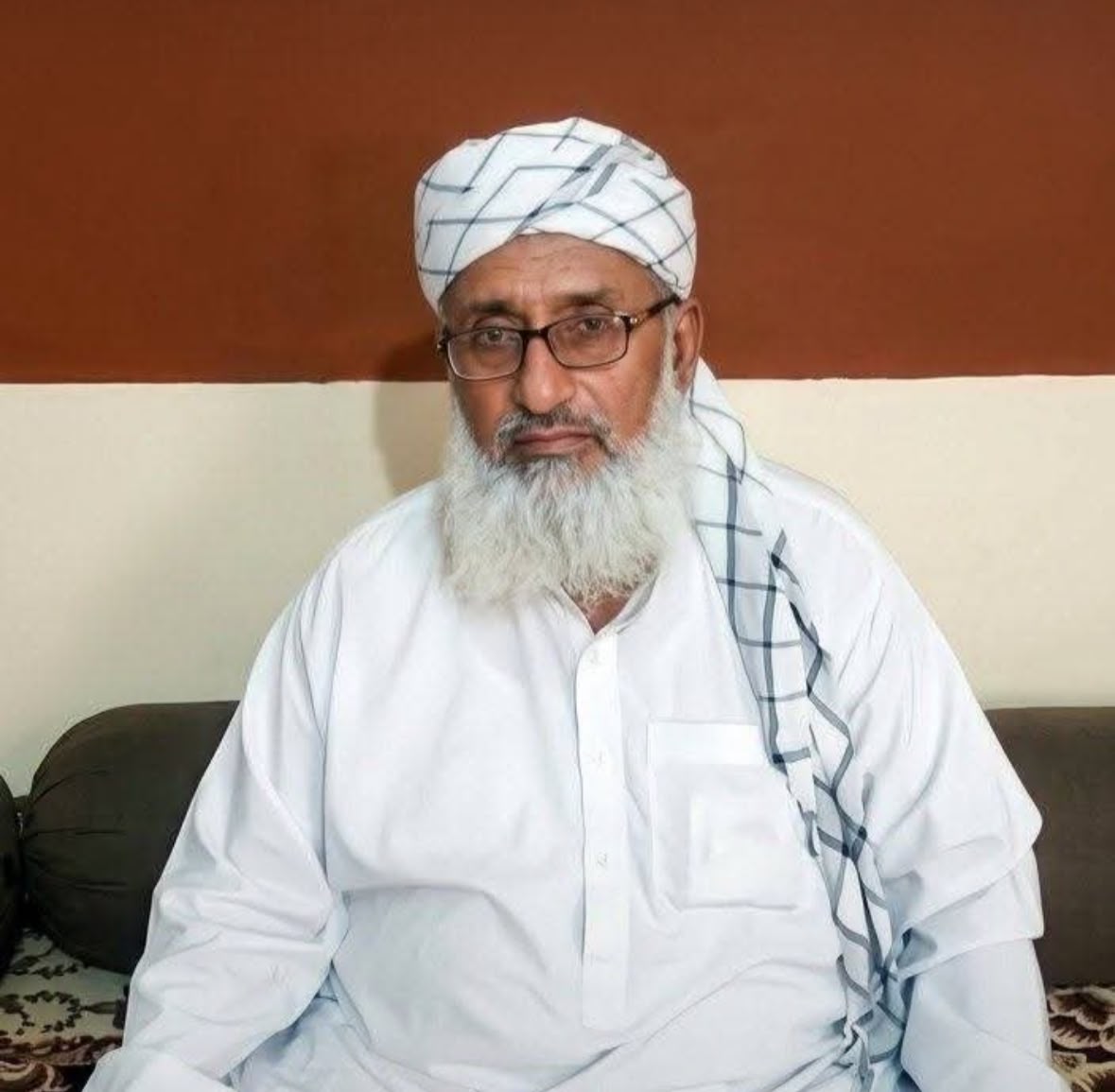
Master Inayatullah JattakThe demands concerning Asma continued. Different people were still being sent to the family’s home, pressing them to agree to her marriage to Zahoor Jamalzai.
Two days before his murder, Master received a threatening text message from Zahoor. The message warned him to prepare a shroud for his son, Atta Ullah, who, Zahoor threatened, would not be allowed to live. Later that night, Zahoor called him six or seven times, continuing the threats. Among them was a warning that Asma would be abducted again.
On August 4, 2026, Asma made another public appeal for protection. In a video posted on social media, she held the Holy Quran and spoke about the threats her family continued to face. She warned that her father and brothers were in danger, that the pressure to force her into marriage had not stopped and that she feared being abducted again.
It was an appeal from a woman who had already been abducted once and had publicly recounted the violence she endured. This time, she was warning that her family could be next.
Within hours, her father was shot dead.
It was around 5:30 or 5:40 in the evening. Master Inayatullah was walking to the mosque for Asr prayers, accompanied by his twelve-year-old grandson. According to the family’s account, Zahoor Jamalzai arrived in a white vehicle with three other men. They opened fire on him and fled, leaving him dead.
Master Inayatullah had spent more than thirty years working as a schoolteacher before retiring. He also served as the muezzin of his local mosque. His life had been shaped by the routines of teaching, prayer and caring for his family. For decades, he had devoted himself to educating other people’s children. In the final years of his life, much of his struggle had been devoted to protecting his own.
He was on his way to the mosque, accompanied by his young grandson, when he was shot dead. The man who had spent years trying to keep his family safe had himself become another victim of the violence he had struggled so hard to end.
What the Record Cannot Tell
What I have written here is perhaps only a drop in an ocean of suffering. It is a chronology of what happened: the people who were killed, the threats that were made, the doors that were knocked upon and the appeals that went unanswered. But how does one write what it felt like to live through it all? How does one measure the life Asma has been left to live, the fear that must accompany her most ordinary days.
What I have set down is a history of events. It does not tell me what it feels like to be Asma: to live with the knowledge that a refusal to marry was followed by years in which her family buried people they loved.
I can write that children in the family no longer go to school. I cannot borrow their mornings, or know what it feels like to grow up with fear replacing the ordinary rhythms of childhood. There are things a family can recount: dates, names, places, messages, telephone calls and complaints. There are things a journalist can document. And then there is an entire life being lived beyond the reach of either.
In her account, Asma spoke of the guilt that had gradually taken hold of her, of how she had begun to see herself not as a blessing to her father, but as a burden. At times, she said, she even wished she had never been born, believing that perhaps her family would have been spared the suffering that followed.
Her family is now further scattered. Some have left Khuzdar and sought refuge in different places, living with the uncertainty of what might happen next.
Asma says she has knocked on every door from which her family thought help might come. They sought protection, filed complaints and appealed to those they believed could intervene. But after sixteen years, she says, she has lost hope in human beings.
Zahoor, whom she and her family hold responsible for years of threats and violence, still roams free. She believes his continued freedom is sustained by the powerful connections he enjoys.
She now looks only to God for justice, believing that even if her family’s suffering goes unanswered in this world, it will not remain unanswered in the hereafter.
