
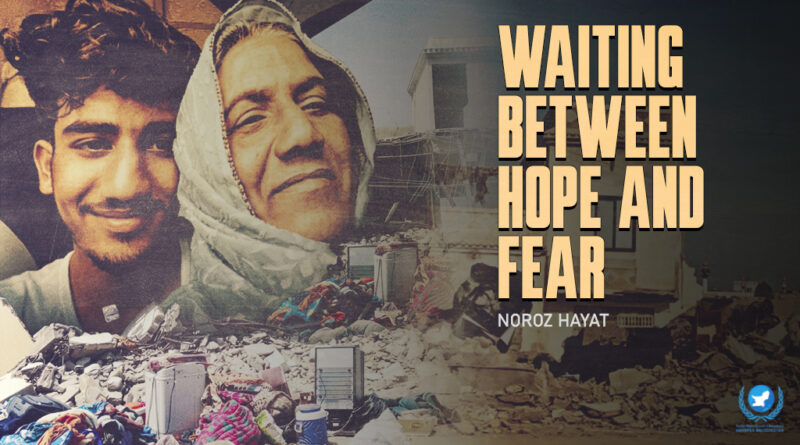
Waiting Between Hope and Fear
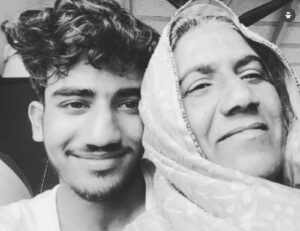
Ali Asghar is missing.
According to his family, the nineteen-year-old fisherman was taken from his home in Panwan, Jiwani Tehsil of Gwadar district during a security raid in April 2026 by Pakistan’s Military Intelligence (MI), one of Pakistan’s most feared intelligence agencies. Since that night, his relatives say, no authority has acknowledged where he is or why he was taken. Months have passed without any official information about his fate.
The family says his abduction was only the beginning.
When interviewed, his brother Zaheer recalled another day when security forces came to their home and seized the engine of the family’s small fishing boat—their only source of income. Without the engine, the boat could no longer go to sea, leaving the family without a livelihood. Subsequently, extended family stepped in to help.

Zaheer, a peaceful political activist, said he has long spoken publicly against enforced disappearances, calling on authorities to bring missing persons before a court if they are accused of any crime. He said his activism has always been peaceful. It did not matter. Zaheer was arrested twice because of his political activism. On both occasions, he was produced before a court and later released. He said he spent nearly two years fighting the cases against him before they were eventually resolved.
Another brother of Ali Asghar and Zaheer has joined the Baloch insurgency. The insurgency, Baloch Liberation Army (BLA), is fighting for freedom, to remove the Pakistani military who are subjugating the Baloch people. Because of this, security forces and intelligence agencies later pressured his father to disown his son publicly. His father complied, hoping the pressure on the family would end.
However, “It changed nothing,” Zaheer said, his voice weighed down by sadness and disappointment.
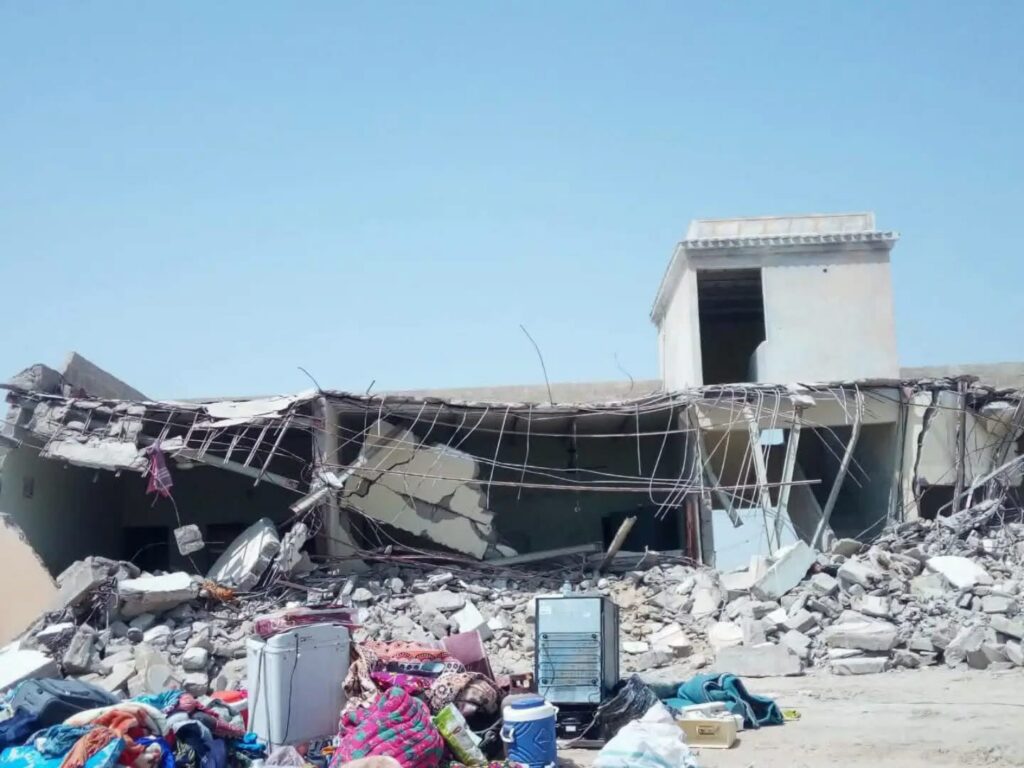
Then came the demolition.
The intimidation by the Pakistani military did not just focus on individuals following an attack by the insurgent BLA on a nearby coast guard camp; the security forces struck fear into every home in the nearby villages, Gwadar district.
“On 6 July 2026,” Zaheer related this terrible experience his parents suffered, “Pakistani Army personnel, accompanied by plainclothes security officers, returned to our village with a bulldozer and began demolishing our family’s home. My mother begged them not to destroy it. She told them, ‘We already publicly disowned one son. You forcibly disappeared another son. And my son, Zaheer, is living as a refugee in Iranian Balochistan. This is my house and my husband’s house. It does not belong to our sons.”
Zaheer said, one of the security personnel replied:
“That is exactly why we are here. One of your sons is a terrorist who joined the BLA. Another son, Zaheer, is in Iranian Balochistan using social media to spread propaganda against us. And we already have another one of your sons with us.”
Zaheer said his mother continued to cry and plead with them to spare the house. The officers ended the conversation by saying, “We received orders from above,” before demolishing the family home.
Ali Asghar’s family was not alone.
On the same day, Pakistan Army personnel demolished nine more homes in Panwan village. Among the homes reportedly destroyed were those belonging to Mohammad Jan Kalmati, Jafar Kalmati, Ghulam Nabi Kalmati, Yar Jan Kalmati, and Peer Gul Kalmati. There are also reports that several additional houses were demolished on July 13, but which families owned the homes could not be independently verified.
Five men who own the demolished homes are brothers. Zaheer added that because of fear of persecution, they and their families had fled to Iranian Balochistan, where they were living as refugees. Only able to take with them what they could carry, their demolished homes left them nothing to return to.
Not satisfied with just demolishing homes, Army personnel seized a car belonging to one of the affected families. According to residents, the vehicle has not been returned.
The destruction reached far beyond bricks and concrete. Some families lost their homes. Others had already lost relatives to enforced disappearance. Many were left wondering what might happen next.
For many families in Balochistan, uncertainty has become part of everyday life.
Some travel from one government office to another, hoping someone will tell them where their loved ones are. Others stand outside press clubs holding photographs that grow older with each passing month. Many choose not to speak publicly at all, fearing that doing so could place the rest of their family at greater risk.
Their fear has only deepened after the latest military operation in Gwadar district.
Following the operation, Pakistani authorities announced that several militants had been killed. According to the Human Rights Council of Balochistan, all five of those men had previously been subjected to enforced disappearance before later being identified among those reported killed. HRCB says these cases reflect a recurring pattern in Balochistan in which victims of enforced disappearance later reappear among those officially described as militants killed in security operations.
For families like Ali Asghar’s, those cases have become a source of growing fear. Every military operation raises the same question: Will missing relatives ever return home, or will they one day reappear only in an official announcement?
Being forced to disown one son publicly, losing another to enforced disappearance, losing their only source of income, and their family home being reduced to rubble have devastated Ali Asghar’s family.
Ali Asghar’s place in the home remains empty.
Despite everything they say has happened to them, his family still hopes he will return.
Hope and fear have existed side by side since the day Ali Asghar disappeared. But every military operation deepens that fear, reviving the anxiety that missing relatives may never return alive or may one day be identified only in an official announcement.
For families of the missing, waiting is no longer simply the absence of answers. It has become a way of life—living between hope and fear, unable to move forward yet unwilling to give up on those who are missing.
Ali Asghar’s story is not over.
Neither is his family’s waiting.
His family still hopes that one day Ali Asghar will come home.